wind off the southern ocean, dolerite columns, a thousand feet down
Reserve a Tasman Peninsula walking trip in Tasmania
We hold eight nights in southeast Tasmania from $3,966 per person on two sharing, four of those nights in lodges on the cliff route itself, with your bag moved forward while you walk. What people ask for is the rock: vertical dolerite, the sea taking it apart column by column, and a walking line along the top of it for four days. The week is fixed by the operating company and the exact start inside it is confirmed once, in writing.
Eight nights, from $3,966 per person.
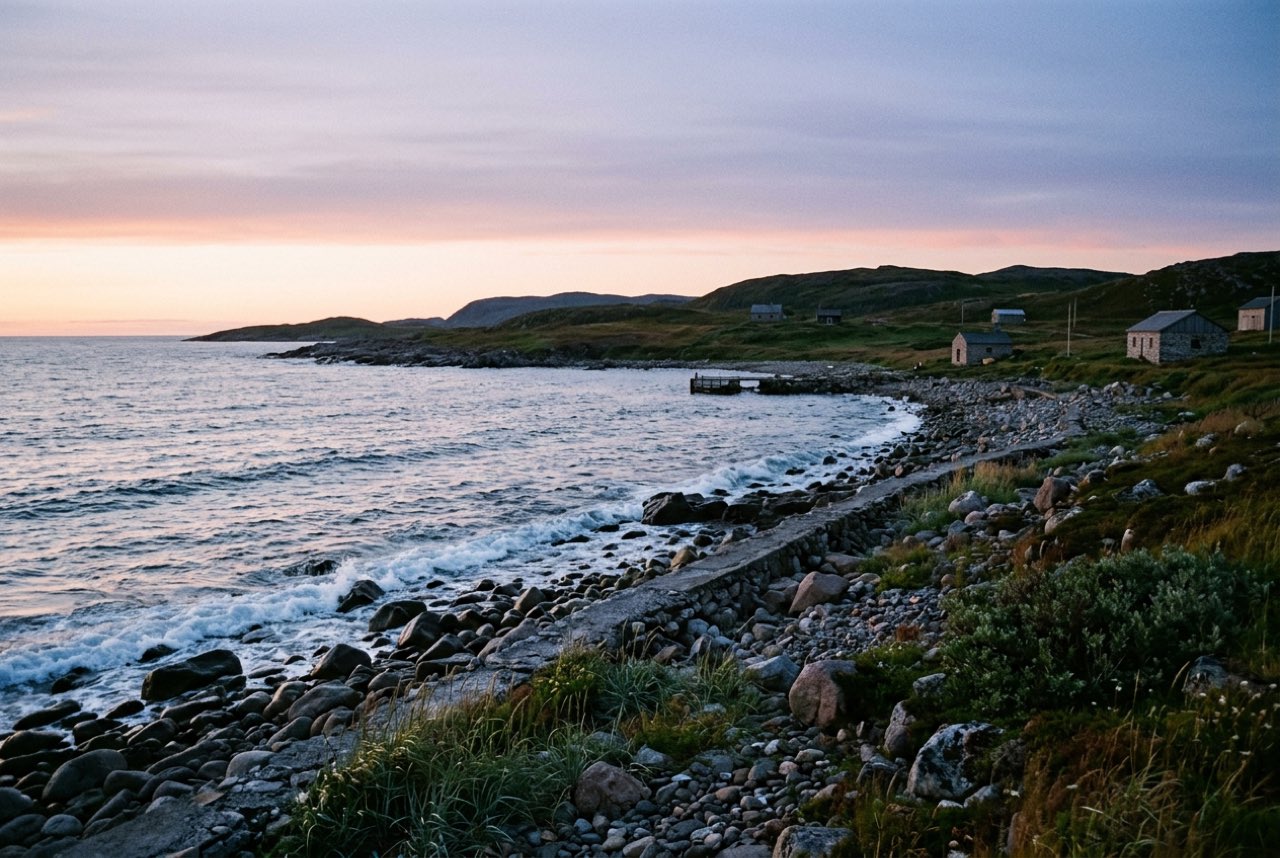
To reserve a Tasman Peninsula walking trip is to ask us to hold four separate things on one set of dates: a bed for eight nights, two places on one of the guided starts the operating company runs inside a single named week of November, seats in the vehicle that covers the sixty miles southeast out of Hobart, and the crossing that puts you on the gravel beach where the walking begins. We ask for the week first. The operating company fixes it, and everything else is built around whichever start inside it comes back confirmed.
The peninsula hangs off the bottom right corner of Tasmania, which hangs off the bottom of Australia. It runs about forty miles, tied to the rest of the island by a sand isthmus roughly a hundred feet across, and its eastern face is a wall of dolerite that the Southern Ocean has been prying apart column by column. Stand on the top of it looking the right way and the next land is Antarctica. The booking puts you on that edge for four days.
Four of the eight nights are in lodges no road reaches. The other four are in a guesthouse room at the isthmus with its own bathroom, a window on the water and dinner at seven. Your overnight bag goes forward without you on walking days, so you carry a day pack, three liters of water and a shell, and that one arrangement is why walkers in their late sixties come off this route in the same condition as walkers in their thirties.
When it goes
Several starts inside one named week in November
a week of dates: several starts inside one named week
What is reserved
A Tasman Peninsula walking trip in Tasmania
Eight nights, from $3,966 per person. Send a booking request
The reservation holds one twin or double room across eight nights, four of them in walkers' lodges that no road reaches, plus both road transfers, the water crossing to the trailhead and two places on a single guided start inside the named week.
The peninsula is a slab of dolerite roughly forty miles top to bottom, and the sea has cut its eastern face back to bare vertical columns, some of them 985 feet from the walking line down to the water. There is no beach under those cliffs and no ledge partway, so the route stays high for four days and the only direction to look is out. A single column stands off the far cape, about 210 feet of it and thirteen feet wide at the base, with daylight showing through the gap behind it. Tasman Island sits off the second cape with a light on top, put up in 1906, and stores for the keepers were winched up from a landing that a swell could close for a month at a time. In November the heath along the top is thigh high and in flower, and the ants living in it are the ones that jump. The nearest town of any size is ninety minutes away by road from the point where you walk out.
Eight nights of beds, four in walkers' lodges on the route and four in a guesthouse room at the isthmus with its own bathroom; every dinner, the four on the route cooked by the guides and served at seven; breakfast each morning and the makings of a walking lunch; two guides on the walking section, one at the front and one behind the last walker; the water crossing from the bay to the beach where the walk starts, which the operating company runs under its own passenger licence and bills inside its own contract; the road transfer from Hobart on arrival and back at the end, about seventy five minutes each way; your overnight bag moved lodge to lodge so you walk with a day pack; the walking permit and the reserve entry fee for all four days; a printed set of day maps with distances and climb in feet; a hot shower at every one of the eight beds.
The flight to Australia, which this office does not sell and which you arrange yourself, $1,550 to $2,700 round trip from the middle of the country in November; the domestic leg on to Hobart, $180 to $340; a bed on the mainland if your arrival forces a stopover, $140 to $260; lunch on the two days either side of the walking section, $18 to $30 each; anything you drink with dinner, $9 to $14 a glass; laundry at the guesthouse, $12 a load; entry to the penal station ruins at Port Arthur if you use the free afternoon for it, $34 to $47; something for the two guides at the end, $60 to $120 across the four days; boots, a waterproof shell and a 30 liter day pack, $0 if you own them and $220 to $600 if you do not; any cover for medical costs or cancellation, which is outside anything sold or advised on here.
The route climbs about 6,000 feet in total and 1,580 of that comes in a single morning on cut stone steps at the end of four days of walking. No road reaches the middle two lodges, no vehicle can come for you, and the walk out is the only way out. Days four and five run along open heath at the cliff edge with no shade and no shelter from a wind that can hold thirty knots for six hours at a stretch. If you need a phone signal, a lie in past seven, a menu to choose from or the option to stop at lunchtime, do not book this one.
The rock and what it does to the walking
Dolerite cooled underground in vertical columns and it still breaks the way it cooled, straight down. The cliffs on the eastern side run for miles with no beach beneath them and no ledge partway, and at the high point of the route the ground stops and does not start again for something close to a thousand feet. Columns six feet thick read as matchsticks from up there, and the scale only arrives when a white bellied sea eagle crosses in front of them and turns out to be the size of a thumbnail.
That geometry writes the itinerary. There is no shortcut down to the water and no way to trim a day by dropping to a beach, so the line stays high and the distances are what they are. Most of the surface is laid gravel and cut stone step, which sounds gentle until the last morning, when it goes up 1,580 feet over a wooded hill and down the far side to the bay. Off the built line the heath comes to your waist, it is wiry, and jack jumper ants live in it, which is most of the reason nobody strays.
At the north end the isthmus is narrow enough to see water on both sides at once. In the 1830s a row of chained dogs stood across it to stop men leaving the penal station down the road on foot. On the beach beside it, low water uncovers a shelf of rock cracked into rectangles, some worn hollow into shallow pans and some standing proud like loaves; it is under water most of the day, so on the first evening dinner is set around the tide rather than the tide around dinner.
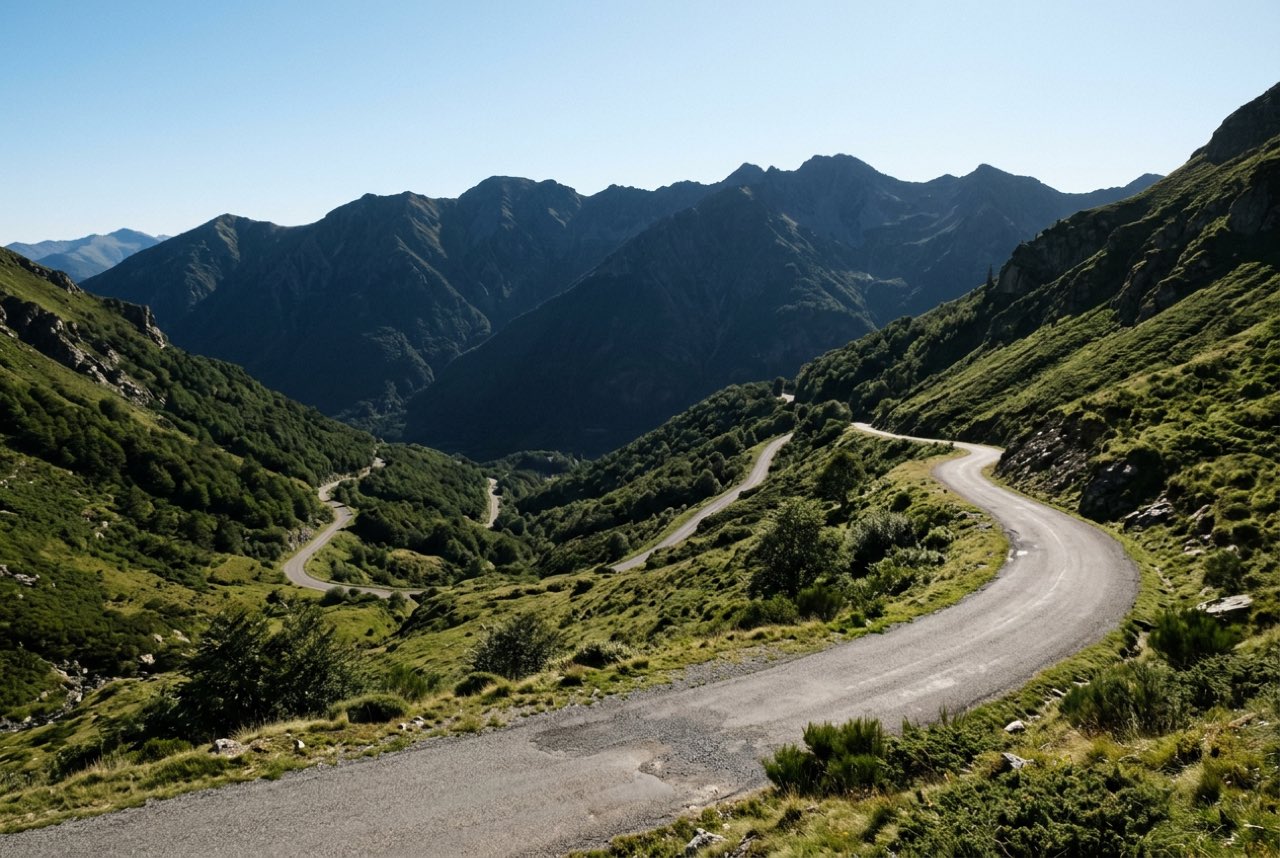
Four days out, and the hours inside them
On foot the trip runs just under forty miles across five days, with four nights spent on the route. The days are 2.5, 11, 10.5, 8 and 7.5 miles, and their shape matters more than the total: a short first afternoon that is all climb, a flat exposed second day, the long one, the hill, then a spur of stone stairs before you walk out. Two guides work each start, one setting the pace at the front and one staying behind the last walker, and the pace at the front belongs to whoever is slowest that morning.
land at Hobart, seventy five minutes by road, the cracked rock shelf at low water before dinner
a loosening seven miles on the cliff path above Waterfall Bay, then bags weighed at five
vehicle to the bay, the operator's crossing to the beach, 2.5 miles and 900 feet up to the first lodge
out and back over flat heath to the near cape, eleven miles, wind the whole way, in by four
ten and a half miles to the second lodge, with the spur to the columns and the gap cut through them
eight miles over the hill at 1,580 feet and down through wet forest to the last lodge
four miles of stairs to the stack off the far cape, then out to Fortescue Bay and back to the guesthouse
yours until dinner: the ruins at Port Arthur, the natural arch, the sinkhole the swell fills below the road
Nobody walks in the dark and nobody walks alone. If the weather shuts the exposed section the guides hold the group at the lodge and take the spur the next morning instead, which is why the middle two days carry a spare half day inside them. The lodges have gas heat, a drying room that actually dries, bunk rooms of four with mattresses, tank water and hot showers. There is no lights out, but the generator stops and after that it is only the wind on the roof.
November at this latitude
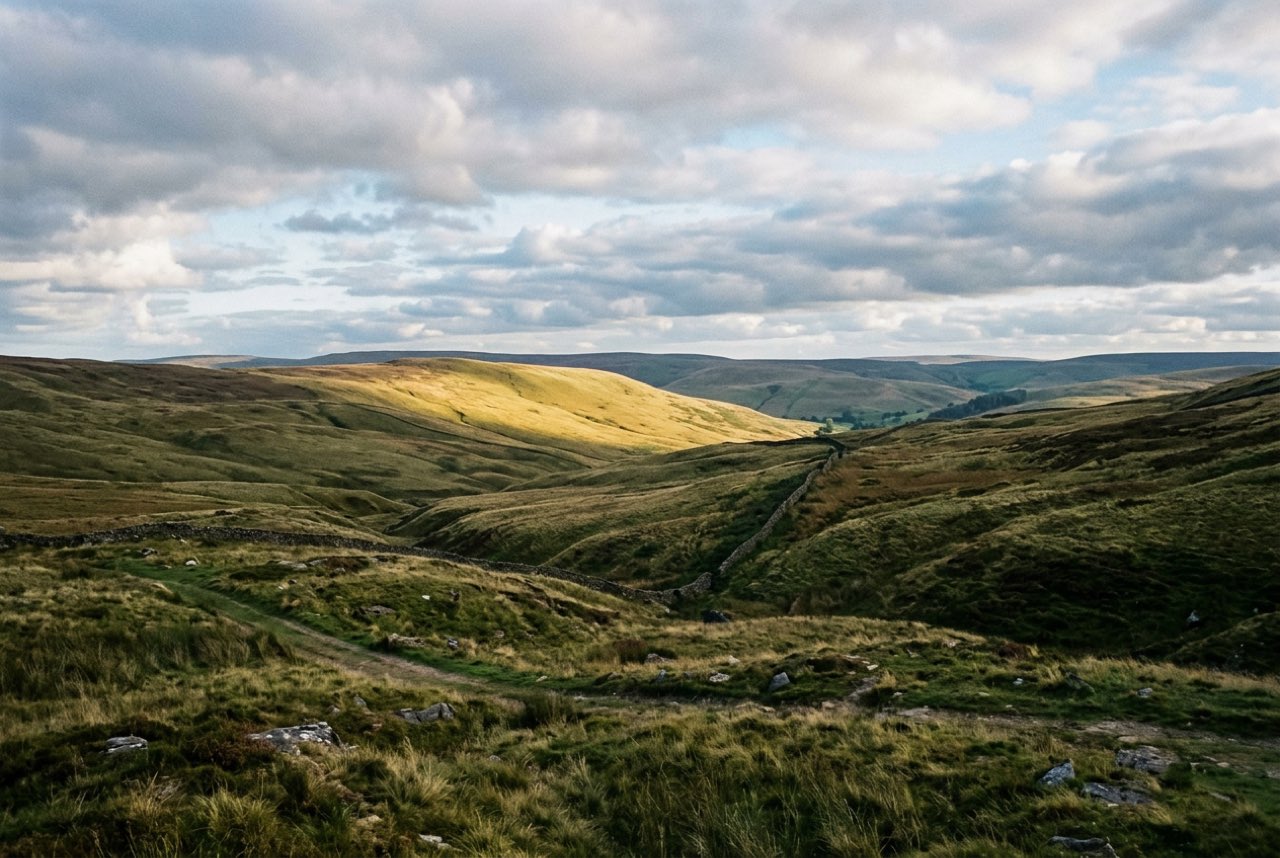
Hobart sits at 42.9 degrees south, about as far from the equator as Milwaukee, and November there does roughly what May does here, with thinner air overhead. Sunrise comes at a quarter to six and there is usable light past half past eight, fourteen and a half hours to work with and no reason to start before breakfast. Highs on the exposed sections run near 63 degrees and the lodges drop into the low forties before dawn. The sea alongside you holds about 57 degrees all month and it will not be warmer in February either, because that water came up from the south.
Wind decides how a day feels far more than temperature does. A westerly holding thirty knots for six hours is an ordinary day, and it arrives across open water with nothing in the way to slow it down. Rain falls on about twelve days of the month, usually in bands of twenty minutes. The ozone at this latitude is thin in spring, and on a clear morning the ultraviolet index reads ten by eleven o'clock, which is not what a Missouri November prepares anyone for.
Short tailed shearwaters that spent the northern summer in the Bering Sea are back in burrows along these headlands, and they lay their single egg in the last week of November; at dusk they come in fast and low and land badly. Bennett's wallabies and pademelons work the grass around the lodges after seven. Humpbacks move south past the peninsula through October and November, a long way offshore, and plenty of days go by without one.
Getting there and getting back
This office sells no airfare, so the flight to Australia is yours to book and yours to hold. What we do is fit the ground to whatever you manage to get: the transfer meets the flight you name, and if you land the night before we hold the guesthouse room an extra night at the operator's own rate. From the airport at Hobart to the isthmus is about seventy five minutes by road, most of it two lane, the last twenty minutes with water on both sides.
The crossing to the start of the walk is a short passage across the bay and it belongs to the operating company. That company holds the licence for it, runs it with its own crew and bills for it inside its own contract. We carry nobody anywhere. This office owns no vehicles, no lodges and no boats; every bed, seat and mile on this page belongs to somebody else, and our part is to hold it against your names.
The same company writes the contract, sets its own terms for changes and cancellation, and sends the bill to you under its own name. Nothing is paid to us at any stage. We do not advise on entry documents or on medical cover.
Send the week you can leave, the full legal names of both walkers, twin or double, and anything about knees, backs or ankles the guides should know before day six. Costing a specific set of days against real beds and getting the figure back in writing takes two to four working days, and if the week you want will not work we say so in the same message rather than later. Write to bookings@thirdcoastdispatch.com. If a trip we booked has gone sideways while you are inside it, corrections@thirdcoastdispatch.com reaches the person who can change something, and +1 (816) 525-2846 is answered in working hours; we do not call anybody who has not asked to be called.
The name on the confirmation is Third Coast Dispatch, the entity behind it is Third Coast Dispatch Bookings LLC, and the office is at 600 SW Jefferson St, Suite 302, Lee's Summit, MO 64063, under the law of Missouri. Most people who book this walk live within a two hour drive of Kansas City, MO, and a fair number put the day maps on our table before they commit to four days of it.
Put a departure in front of the office
Open 24/7, this form will take a booking request whenever you write it. Nowhere on it is a card number requested and nothing is charged, because no money is ever owed to this office. Whatever reaches the form is opened in the order it landed, and an answer goes back inside one working day.
Nowhere on this page is a card number requested, and none is kept by this office anywhere. Writing costs you nothing and ties you to nothing. Asking is not the same as holding: your date belongs to whoever asks next until the operating company has confirmed it on paper and you have read what it requires of you.