ice ridges on the north shore, warm mud, light back until seven
Reserve six nights on Saaremaa in March
This holds six nights on Saaremaa inside one week of March, three at a spa hotel in Kuressaare and three at a six room farm guesthouse in the west of the island, from $2,374 per person with two people sharing. It is the fortnight the strait ice stops being a surface and turns into moving plates, and the west shore still carries several thousand sea ducks that will be gone north by the end of April. A driver has four of the six days and a guide has three of those.
Six nights, from $2,374 per person.
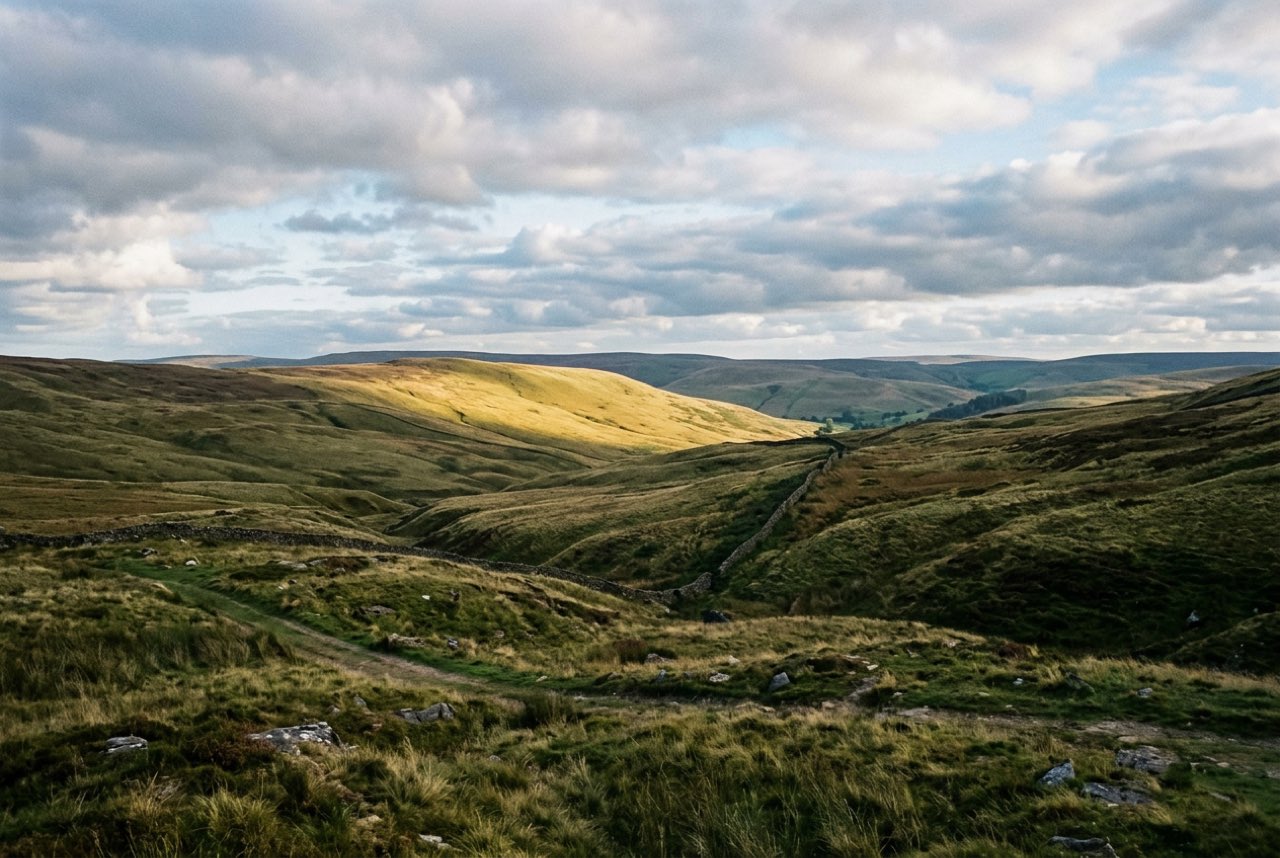
Saaremaa in March sits between two conditions and belongs to neither. The strait that separates the island from the Estonian mainland has been hard since January, and by the second week of March the ice on it is gray, split into plates and moving with the wind. You reserve six nights while that is going on: three in Kuressaare at a spa hotel with mud rooms downstairs, and three at a farm guesthouse about thirty miles west, out where the fields give up and the juniper takes over.
There are four starts inside one named week. The company that operates the trip fixes those dates in the autumn and does not add to them inside the month, because the guide it uses works this one week in March and then goes back to counting birds for the reserve.
Nobody comes to a Baltic island in March for the weather. The visitor season here is June through August. In March the ground is brown, the meadows are dead flat, and half the places on the main street in Kuressaare keep short winter hours. What is happening instead is water and light: what the sea is doing to the shore, what the melt is doing to the fields, and how quickly the evenings are coming back. On March 1 the light is gone by just before six. On March 31, after the clocks move forward, there is sky until nearly eight.
When it goes
Four starts inside one named week in March
a week of dates: several starts inside one named week
What is reserved
Six nights on Saaremaa in March
Six nights, from $2,374 per person. Send a booking request
One room for two people: three nights held at a Kuressaare spa hotel, three at a farm guesthouse about thirty miles west, a car and driver on four days, a guide on three, and both strait crossings held by the company that operates the week.
Saaremaa is a slab of limestone off the western end of Estonia, 1,032 square miles of it, so flat that the highest ground anywhere on the island stands 177 feet above the sea. The town of Kuressaare holds about thirteen thousand people and every other settlement is a road with houses along it. March average highs run 38 to 39 degrees and the nights drop to 26 or 28; the water off the west shore sits at 34 to 36 and there is fast ice in the bays until it goes. The day lengthens by roughly five and a half minutes every twenty four hours through the month, so the last morning of your week has about forty minutes more light in it than the first. Junipers grow low and dense on the alvars, which are grasslands with an inch or two of soil over flat rock, and in March they are the only green thing standing. Nothing flowers yet. The interest is in water, in ice and in how fast the evenings are coming back.
six nights for two people in one room, three at a spa hotel in Kuressaare and three at a six room farm guesthouse in the west; breakfast every morning and four dinners, one of them cooked out of the farm cellar; two mud treatments and the hotel pool and saunas for the three nights you are there; a car with a driver on four of the six days, including the run out from Tallinn on arrival and the run back at the end; an English speaking local guide on three of those days; both strait crossings between the mainland and Muhu, which the company that operates the week holds under its own license and bills you for; entry to the castle, the crater field and the windmill ridge; a spotting scope on a tripod and two pairs of binoculars kept in the car for the west shore; the farm sauna heated once on two hours of notice; and the operator's written schedule, with the driver's number on it, in your hands before you leave home.
the flight to Estonia and home again, which this office does not sell and you arrange yourself, $780 to $1,450 round trip out of the middle of the country in March; the two lunches and two dinners that are not on the schedule, $14 to $30 a head in Kuressaare and less out at the farm; any mud or water treatment beyond the two that are held for you, $35 to $70 each; a rental car for the two days you have no driver, $55 to $90 a day in March with winter tires on it; fuel, $30 to $50 for a week at island distances; the crossing on any day you go back to the mainland by yourself, charged at the landing by the company that runs the boat, $9 to $13 for a car and two people; the farm sauna heated a second or third time, $30 a firing; drinks with dinner, $5 to $9 for a beer and $22 upward for a bottle of wine; anything you carry away from the Friday market, $10 to $60; and tips, $0 to $60 across the week, which nobody on the island will ask you for.
March here is brown, windy and wet underfoot, so if you need color or warmth this is the wrong month and there is no arguing with it. There is no gradient on Saaremaa worth mentioning, but there is standing still outdoors in a wind off open water for twenty minutes at a stretch at temperatures between 26 and 40 degrees, and people who feel the cold hate it. The farm guesthouse is nine miles from the nearest shop, the kitchen serves at seven and after that there is a wood stove and whatever you brought to read. If you want late restaurants, a town with something going on in it, or a beach you can sit on, this week will bore you and you should reserve something else.
The strait, and the week it stops holding
The mainland landing is at Virtsu and the island landing is at Kuivastu on Muhu. The water between them is about four miles across and the boat takes twenty seven minutes. Muhu is joined to Saaremaa by a causeway roughly two miles long, laid across shallows that in a cold March are still white on both sides. That crossing is sea passage and this office has nothing to do with it: the company that operates the week holds the passage under its own license, arranges the boat and puts it on the bill it sends you.
In a hard winter the road authority opens an ice road on the same line, about six miles of it. The rules are posted at the entrance and they are not decorative. The ice has to measure at least 8.7 inches. You go in daylight only. You do not wear a seatbelt and you leave a door unlatched. You keep under 15 miles an hour or between 25 and 44, never in the band between, because a car at the wrong speed sets up a wave underneath that travels with it. You do not stop, and you keep 250 yards behind the vehicle in front.
The ice road is not part of this reservation and cannot be promised to you. Some winters it never opens at all. When it does open, it usually closes in the first half of March, the same fortnight this trip runs. If it is open on your first morning, you cross on it and the day rearranges itself around that. If it is shut, you go on the boat, and the ice you came for is the ice you watch from the shore.
Kuressaare, the moat and the mud rooms
Kuressaare is the only town, built around a castle that was never pulled down and never rebuilt into something else, which in this part of the Baltic makes it an oddity. The keep is gray dolomite, square, with a courtyard inside it and a dry moat around it that picked up four earth bastions at the corners later. In March the moat ice is going or gone, and the town skates on it until the morning somebody ropes it off.
The mud is why most Estonians come here in winter. It is sea mud, dug out of the bays, warmed to about 104 degrees and laid on in a room that smells of sulfur, and the smell stays in your hair through one wash. Mud is a treatment and this office does not advise on it. The hotel runs its own intake, decides what you are given, and two sessions across the three nights are held in your schedule.
Outside the hotel the town in March is a short list. The market beside the town hall opens Friday morning and is packed up by noon. The wooden houses on the side streets are painted in colors that were picked to be seen against snow. Four or five kitchens serve dinner, and two of those stop at nine.
The west end and the birds that sit out the winter
The farm guesthouse has six rooms and a kitchen that serves at seven or not at all. In March that kitchen cooks what is in the cellar: potatoes, root vegetables, pork, black bread, and smoked flounder on the days the smokehouse has run. It is nine miles to the nearest shop. The sauna is wood fired and gets heated on request with two hours of notice.
The reason to be at this end of the island is offshore. Several thousand small sea ducks winter along the west shore, the drakes black and white and visible at distance, still on the water in March and gone to the Arctic by late April. Long-tailed ducks sit in rafts further out and call across the water on a still morning. Whooper swans come back mid month and stand in flooded stubble looking too heavy for the field. Gray seals pup on whatever ice is left through late February and March, and you look at them from land through the scope, because nobody takes you out to them and nobody should.
North of there, Panga is a limestone bank about a mile and a half long and 70 feet high at its tallest point, facing straight into the north wind with nothing between it and Finland. In a cold March the sea shoves broken ice up against the foot of it in slabs stacked to head height that grind on each other when a swell comes in. Inland, Kaali is a hole 361 feet across and 72 feet deep with a lake at the bottom, punched into the limestone by a meteorite; in March the lake is frozen or half frozen. There are eight smaller craters in the woods around it, most under 40 feet across, and you walk past two before the guide points at the ground.
Driving a flat island in March
Distances here are short and the driving is slow. It is about 90 miles from the causeway to the tip of the Sorve peninsula, one road down a 32 mile finger of land with a 171 foot lighthouse at the end. In the thaw the gravel side roads soften enough that you take them at 25, so a 40 mile run up to the north shore costs an hour and twenty minutes rather than forty. The paved roads are plowed and everything on the island is on winter tires until April. Fuel stations outside Kuressaare close at six.
You reach Tallinn on your own arrangement, the driver collects you, 84 miles west to the landing, the crossing, first night in Kuressaare.
Mud at the hotel in the morning, the castle and the moat after lunch, dark by six and dinner in town.
Out to Sorve with the guide, the lighthouse, the shore ice at the tip, back for the second mud session.
The car is yours. Most people run the north shore to Panga, then the ridge at Angla, where five wooden windmills stand in a row.
Move west to the farm guesthouse, Kaali and the crater woods on the way, dinner at seven.
The whole morning on the west shore with the guide and the scope, an hour of it standing still; afternoon loose; sauna if you asked by lunchtime.
Breakfast, the causeway, the crossing, and the road back to Tallinn for a departure you arranged yourself.
Third Coast Dispatch Bookings LLC owns no rooms on Saaremaa, no car and no boat. This office takes your dates and your preferences, asks the company that operates the week for a written price on exactly those days, and hands that price to you with nothing of ours added on top. That company writes the contract and bills you under it. We sell no airfare, so getting yourself into Estonia and home again is your own arrangement, and every figure here is built with that left out.
Putting a firm number on a named set of days takes two to four working days. The operator has to hold the beds, confirm the guide and confirm both crossings for those exact dates before it will commit a figure to writing, and a number that comes back faster than that is somebody guessing.
Send the week you want and the number of people to bookings@thirdcoastdispatch.com, or call +1 (816) 525-2846 and say it out loud. This office is at 600 SW Jefferson St, Suite 302, Lee's Summit, MO 64063, which is the Kansas City metro on the Missouri side, and requests are answered within one business day. If a distance, a temperature or a figure on this page is wrong, write to corrections@thirdcoastdispatch.com and it gets corrected.
Ask the office to hold a departure
Open 24/7, this form will take a booking request whenever you write it. Nowhere on it is a card number requested and nothing is charged, because no money is ever owed to this office. Whatever reaches the form is opened in the order it landed, and an answer goes back inside one working day.
Nowhere on this page is a card number requested, and none is kept by this office anywhere. Writing costs you nothing and ties you to nothing. Asking is not the same as holding: your date belongs to whoever asks next until the operating company has confirmed it on paper and you have read what it requires of you.