gold blocks with straight edges on the far valley wall
Reserve a seven night Pirin walking trip in October
Seven nights in one room in a nine room guesthouse at 2,790 feet in the Pirin, five guided walking days, from $2,929 per person on two sharing. The date is pinned to the eight or nine days when the planted larch blocks above the town are gold and the wind has not yet taken them off. It runs once this year.
Seven nights, from $2,929 per person. Two sharing.
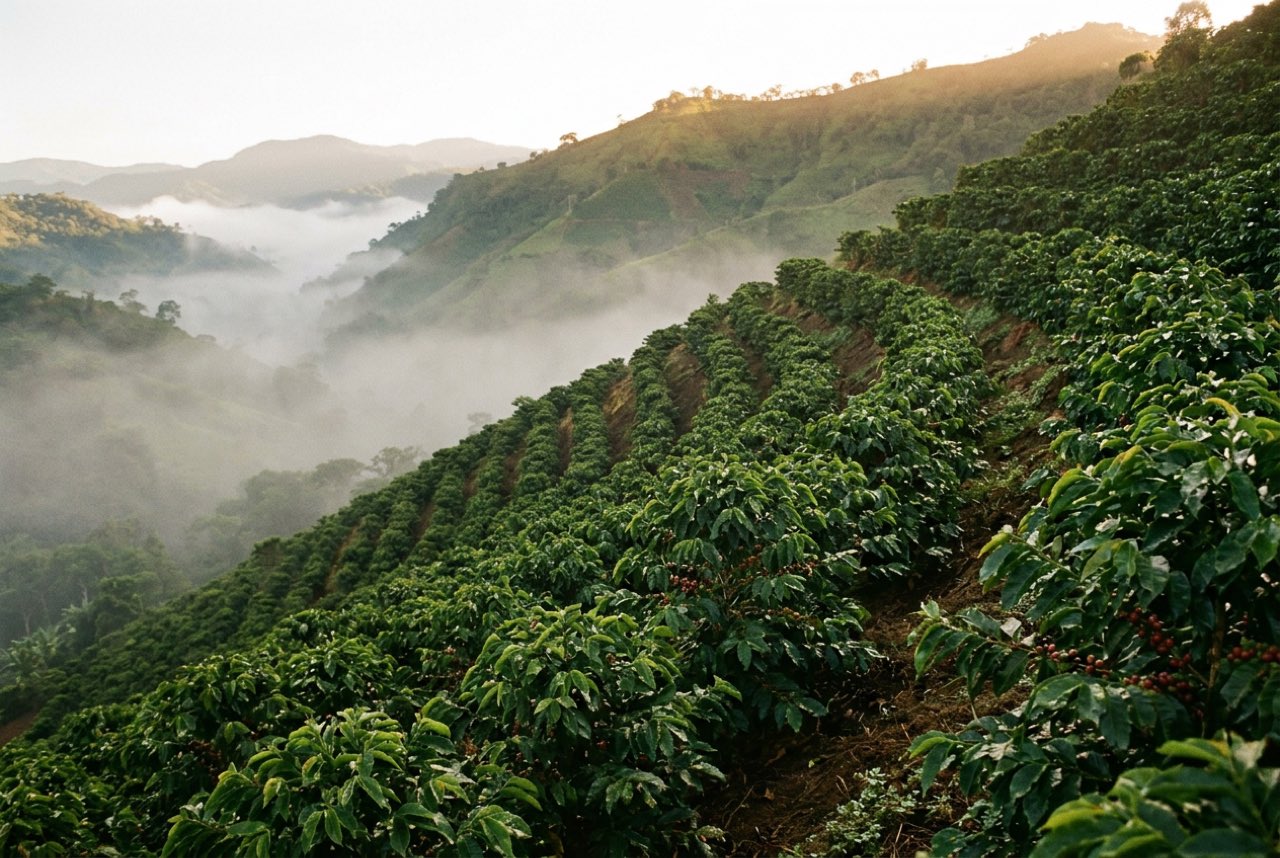
The larch on the north slopes was planted, and that is why it looks the way it does. Forestry crews put it in as rectangular blocks in the 1950s and 1960s, between about 4,000 and 5,600 feet, above the beech and below the Macedonian pine. Larch is the one conifer in this range that lets go of its needles, so once a year those rectangles turn a flat gold while everything around them stays dark, and from the lane outside the guesthouse you see four of them on the far wall of the valley with corners on them. Nothing natural has corners. That is the first thing people notice and the thing they keep looking at.
The color runs downhill. Across the last nine Octobers the upper blocks have started between the 14th and the 18th, and the blocks at 4,200 feet have followed roughly six days later. A block that has fully turned holds for eight or nine days. Then the first hard northwest wind comes over the ridge and takes it off in an afternoon, and by the next morning the same rectangle looks like gray wire. This departure is set across the middle of that, so the high blocks are already gold on the day you arrive and the low ones go while you are walking under them.
What you reserve is a seven night Pirin walking trip in October, on one fixed date, in one town. It runs once. There is no second week of it this year and no November version, because by then the needles are down and the two huts have shut for the season. If those dates do not work for you, the straight answer is that this particular week is not available to you this year, and this office would rather say that than move you into the same mountains in a month when the trees are doing nothing.
When it goes
One departure, 17 to 24 October
one fixed date: it runs once this year, and there is not another
What is reserved
A seven night Pirin walking trip in October
Seven nights, from $2,929 per person. Two sharing. Send a booking request
You sleep seven nights in the same room. The guesthouse has nine rooms, stone to the first floor and timber above, on the upper lane of a town of about 2,600 people. Breakfast is at eight. Dinner is at seven on four of the evenings, one pot carried in from the kitchen, and the layered clay pot dish the basin is known for has to be ordered the day before because it sits in a low oven for four hours. The rooms have radiators and no cooling, which in the third week of October is the right way around: valley nights run from 38 degrees down to about 30 by the end of the month.
One twin or double held for seven nights, five guide days, one high clearance vehicle on the forest road and two chairlift seats on the lake day; the beds never move and neither do you.
The larch here was planted, in rectangles, by forestry crews in the 1950s and 1960s, between roughly 4,000 and 5,600 feet on the north slopes, above the beech and below the Macedonian pine. Larch is the only conifer in this range that drops its needles, so once a year those rectangles go gold against dark green and read from the valley floor as four patches with hard straight corners. The turn moves downhill: in the last nine Octobers the upper blocks have started between the 14th and the 18th, with the lower blocks about six days behind. A block holds full color for eight or nine days, and then the first northwest wind strips it in one afternoon. Behind the blocks the range is marble and granite, with Vihren at 9,560 feet and a mile of ridge on either side of it that is bare rock. Daylight over the week runs from about eleven hours to ten and a half, and the town sits at 2,790 feet with seventeen mineral springs coming out of the ground at 100 to 108 degrees.
seven nights in a nine room guesthouse, one twin or double, two sharing; breakfast at eight every morning; dinner at seven on four of the seven evenings, cooked in the house and brought to the table in one pot; five guided walking days with a mountain guide who lives in the valley and works in English; the road transfer from the capital's airport on arrival and back on the last morning, two and three quarter hours each way; the forest road run in a high clearance vehicle up to the hut at 5,580 feet on the lake day; the chairlift ticket up and down on that day; national park entry for the week; one entry to the town baths; tea and bread at the hut above the lake; a 1:50,000 sheet map of the range for each room.
the round trip flight from the middle of the United States to the capital, $950 to $1,500 in October, which you arrange yourself; three dinners in town, $12 to $22 each; lunch and whatever you carry up the hill, $6 to $12 a day; drinks, $2 to $4 for a half liter of beer and $9 to $16 for a bottle of the local red; the minibus four miles up the basin to the next town, $1.50 each way; extra chairlift rides on the free day, $8 up and down; boot and pole rental in town if you decide against carrying your own, $6 a day; a single room instead of two sharing, $340 for the week; tips for the guide and the driver, $70 to $110 across the seven days; anything you choose to do on the free day, $0 to $60.
One walking day climbs 2,300 feet in the first two and a half miles on a path that is loose marble chip for the top third of it, and if you have not done that in the last year it will take you four hours rather than two. The chairlift is an open single seater and you sit still in it for twenty five minutes at around 40 degrees with whatever wind is running down the cirque. Two of the valleys have no phone signal at all, the nearest hospital is twelve miles away in the next town down, and coming off the lake means walking out on your own legs. Evenings are quiet in a way some people find long: the town has four places to eat, one shuts at nine, and there is nothing else after that.
Seven nights in Dobrinishte
Dobrinishte has seventeen mineral springs, most of them inside the town boundary, feeding public baths where the water arrives at between 100 and 108 degrees. The tap water smells faintly of sulfur for the first two seconds and then stops. The narrow gauge railway that climbs across the Rhodopes ends at the station here, thirty inches between the rails, five hours from the plain, and its highest station stands at 4,157 feet. A one way ticket on the leg you would ride on the free day costs about three dollars and is bought at the window; it is not part of what you reserve, and nobody will meet you at the other end.
The town does not do much for visitors in October, which is the point of coming then. The sheep are down off the high pasture by the second week, so the tracks above 5,000 feet are quiet and the flocks are in the fields below with their dogs working loose around them. If you meet one on a lane, the local practice is to stop walking, let the dogs come and let the shepherd call them back, and your guide will say the same thing on the first morning. Bansko, four miles up the basin, has an old quarter of walled stone houses and a church of 1835 with a bell tower about a hundred feet high; the minibus takes fifteen minutes and runs roughly hourly until six.
Marble, and where the walking gets hard
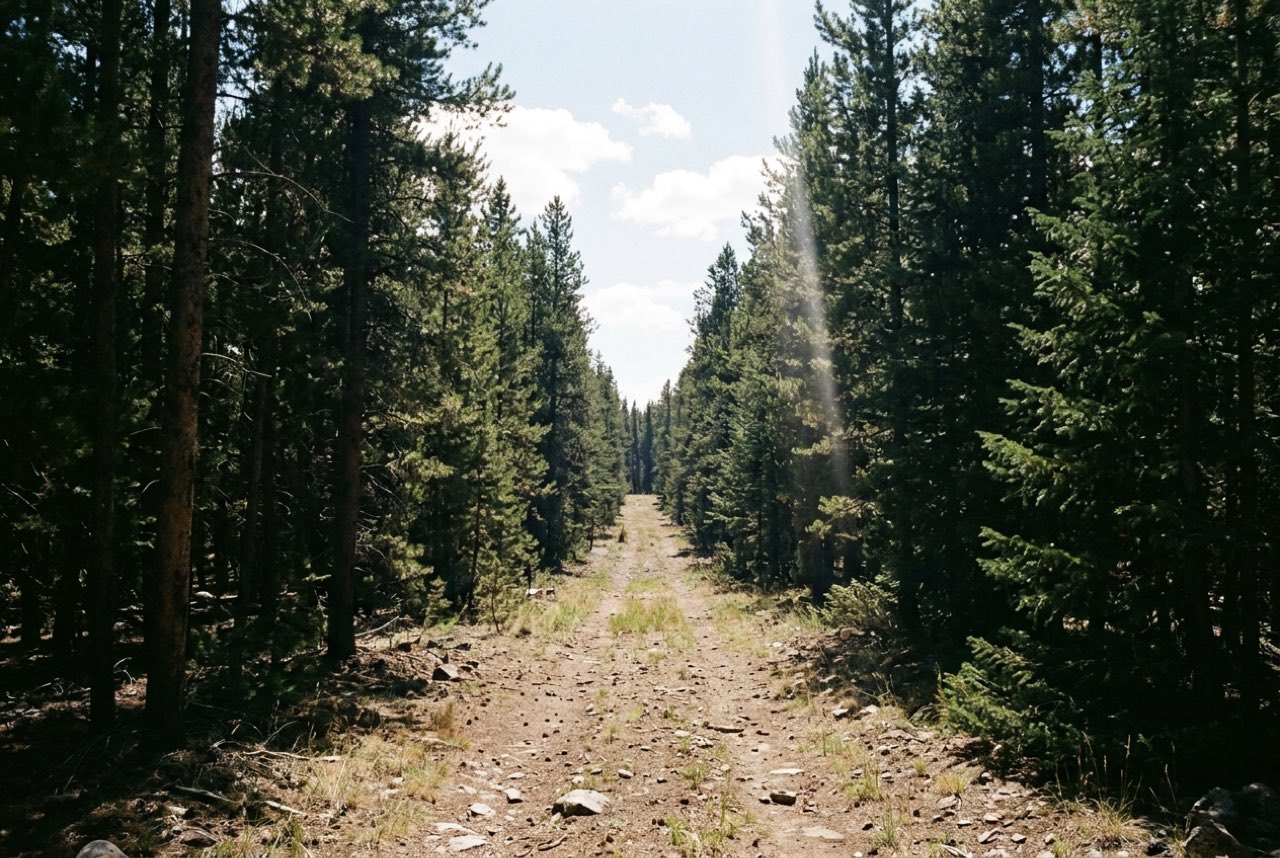
The high ground behind the larch is marble in the north and granite in the south, and the join is visible from the trail as a change of color in the scree. Vihren stands at 9,560 feet, the second highest summit in the country, and the wall under it holds snow in shaded gullies through most of the summer. This week does not go up it. Two of the five walking days work along the base of that wall at between 5,600 and 7,000 feet, where the path is a marble chip that squeaks underfoot and cuts the welt of a soft boot inside a season.
One tree is worth the detour on the second day: a Bosnian pine at 6,330 feet, about 85 feet tall, with a girth of roughly 25 feet, that foresters date at over 1,300 years. It stands twenty minutes above the hut on a rise with a fence around the base of it. The lake day is the other side of the massif. A forest road climbs nine miles from the edge of town to a hut at 5,580 feet in about an hour of low gear, then a single chairlift takes twenty five minutes up to 7,350 feet, and from there it is four miles over a saddle to the largest lake in the range, 7,330 feet up, ninety eight feet deep, usually with ice on the shaded rim by the third week of the month.
land in the morning, road east over a pass at 3,750 feet, in the guesthouse by four, dinner at seven
short legs first, five miles on the forest track through the lower blocks, 1,100 feet of climb
the marble side, eight miles under the high wall, lunch out of a pack, back by five
the lake day, forest road at eight, chairlift at nine, four miles over the saddle and back
nothing arranged, baths open ten to six, or one leg of the narrow gauge line and back
the long one, 2,300 feet in the first two and a half miles, turn at the hut, down the same way
six miles low through beech and hornbeam, the old quarter four miles up the basin, last dinner
away at seven, at the airport by ten, the blocks still gold behind you for the first mile
The road in from the capital
The capital's airport is a hundred and five miles from the guesthouse door. The transfer takes two and three quarter hours: dual carriageway south down the valley, then thirty miles of two lane road east over a pass at 3,750 feet and down into the basin, with the whole north face of the range in the windscreen for the last twenty minutes if the cloud is off it. Arrivals before two in the afternoon land you in time for the first dinner. If your flight gets in after eight, the driver will still be there, but the kitchen will not, and the house will leave bread, cheese and a bowl of something on the table.
Holding the October date
Nothing on this page belongs to Third Coast Dispatch Bookings LLC. The nine rooms belong to a family in Dobrinishte, the vehicle on the forest road belongs to the man who drives it, the chairlift belongs to the company that runs the lift, and the guide is self employed and lives eleven miles away. This office puts your name against those things and checks that all of them say yes for the same seven nights. When they do, the company that operates the week sends you its own confirmation and its own bill, under its own contract with you, and you settle it with them. No money moves through here at any point, in any form.
Ask for the week and this office goes and asks. Getting a firm figure written against your two names for these exact dates takes two to four working days, because it waits on a guesthouse that answers email in the evening and a guide who is out on the hill until Thursday. Nobody here will pretend that is instant. What comes back is a written figure with the room type on it, what is in it, what is not, and the date the operating company needs an answer by.
Your flight is your own piece of work. This office does not sell airfare, does not quote it and will not touch it, so buy the seat where you normally buy seats and tell us the arrival time once you have it. This office also does not advise on entry paperwork or on medical questions, and will not answer them if asked. Everything else about the week is fair game: write to bookings@thirdcoastdispatch.com with the dates and the two names, call +1 (816) 525-2846 if you would rather say it out loud, and send anything wrong on this page to corrections@thirdcoastdispatch.com. Third Coast Dispatch is the name used by Third Coast Dispatch Bookings LLC, a company formed in Missouri, working out of 600 SW Jefferson St, Suite 302, Lee's Summit, MO 64063, and booking for people across the Kansas City metro.
Put a departure in front of the office
Open 24/7, this form will take a booking request whenever you write it. Nowhere on it is a card number requested and nothing is charged, because no money is ever owed to this office. Whatever reaches the form is opened in the order it landed, and an answer goes back inside one working day.
Nowhere on this page is a card number requested, and none is kept by this office anywhere. Writing costs you nothing and ties you to nothing. Asking is not the same as holding: your date belongs to whoever asks next until the operating company has confirmed it on paper and you have read what it requires of you.