apricots drying on flat roofs, ice on the tent by dawn
Reserve an eleven night Ladakh trip over the high passes
This holds eleven nights in Ladakh, nine of them guesthouse rooms and two of them canvas rooms on the eastern plain, at $3,707 per person on two sharing. The route crosses three passes above 17,000 feet and works both sides of the range, the apricot ground of the Nubra at 8,530 feet and the salt lakes at 14,836 feet. July is the one month when all of it is open at the same time.
11 nights, from $3,707 per person.
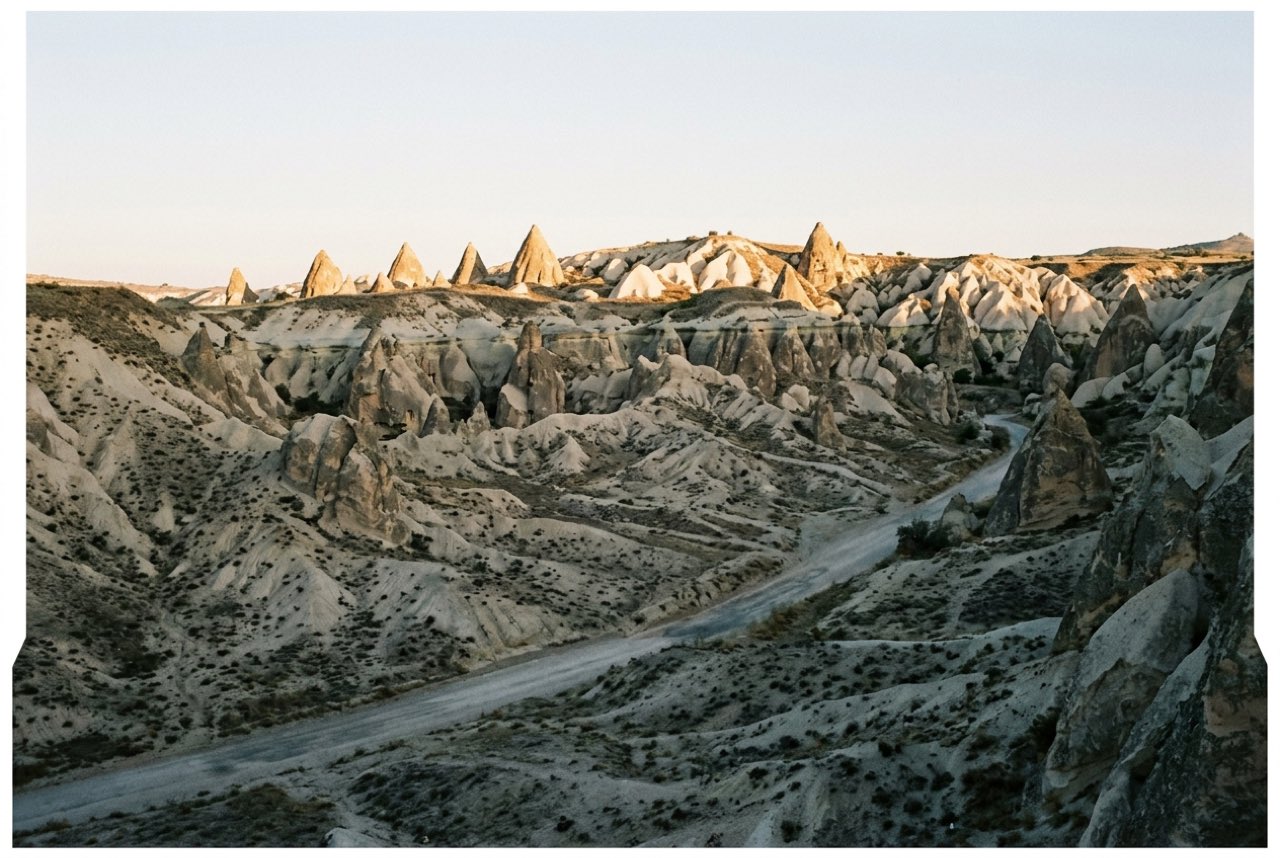
You can reserve an eleven night Ladakh trip over the high passes on any of four starts inside a single week in July, and every mile of it is road and bed. Third Coast Dispatch takes the request and places it with the company that actually runs the route. That company holds the wagons, the guesthouse rooms and the two fixed camps, and it bills you directly, on its own account.
July is the only month when the whole of this is open at once. The pass north opens to civilian traffic in the second half of May most years, the eastern plain becomes reachable in June, the western road shuts for a day or two most Augusts after rain, and by the first week of October the camps at the lakes are down for the winter. Ladakh is behind the main Himalaya and takes about six tenths of an inch of rain in the whole of July. What it takes instead is light. The sun is up around 05:30 and there is usable light until 19:45, because the clocks here are set to a meridian 1,400 miles east and midday does not arrive until about 12:40.
Nothing moves for the first two days. The route holds you in Leh, at 11,562 feet, for two nights before a single pass is driven. That is not padding in the itinerary, it is the load bearing part of it, and the operating company will not sell the route without it.
When it goes
Four starts inside one week, 12 to 18 July
a week of dates: several starts inside one named week
What is reserved
An eleven night Ladakh trip over the high passes
11 nights, from $3,707 per person. Send a booking request
The reservation holds one room for two, or a bed each in a shared room, across four villages for nine nights, plus two named canvas rooms at fixed camps at Korzok and Hanle, with one wagon and its driver moving with you the whole way and a guide from the second morning.
Ladakh sits behind the main range in its rain shadow, which is why the barley stops dead at the edge of the irrigation channel and the mountain behind it is bare grey rock to 20,000 feet. Leh lies at 11,562 feet, higher than any road pass in the lower 48 states. In July the town reaches 77 F by two in the afternoon and falls to 50 F by five in the morning, while at Korzok, 3,000 feet higher, the same night sits near 32 F and a bottle left outside has ice in it. Tso Moriri is 16 miles long, fresh at its north end and salt at the south. On the plain between the lakes you see kiang, the wild ass, in bands of six to thirty, and at Hanle the black-necked cranes stand in the marsh with one or two chicks apiece right through the month. There is no street lighting on that whole plain, so what you can see of the sky at Hanle is limited by your own eyesight and nothing else.
eleven nights of beds, nine of them guesthouse rooms with a door that locks and a private bathroom, two of them canvas rooms on wooden platforms with proper beds and four blankets each; all eleven breakfasts and all eleven dinners, cooked for the house; a diesel wagon and its driver for the full eleven days, one wagon to four travellers; a Ladakhi guide with good English from the second morning to the last; the two Leh nights held at the front of the route before any pass is driven; entry at four monasteries and at the small museum in the Nubra; drinking water from a filtered dispenser refilled in the wagon each morning; a cylinder of oxygen carried in every vehicle; one load of laundry in Leh at the halfway point; ground transfers to and from the Leh airfield on the first and last days.
the flight to India and the onward domestic leg up to Leh, which is the traveller's own arrangement from first to last, $1,150 to $1,950 round trip out of the middle of the country in July; lunches, $4 to $9 a head in the villages and $9 to $16 in Leh; anything to drink beyond the water carried in the wagon, $2 to $6 a bottle; the customary money for the driver and the guide at the end, $110 to $160 a person across eleven days; the short camel ride on the dunes at Hunder, $9 to $15 for half an hour; a room to yourself, $520 for the eleven nights; extra nights in Leh before the start, $45 to $95 at the same standard of room; laundry past the one load, $3 to $6 a kilo; the pony up to the ridge above Korzok, $18 to $25; any change of route once you are on the ground, which the operating company prices on the day at $90 to $130 for a spare vehicle day.
Four of the twelve days on the ground are five to seven hours in a vehicle on surfaces that are loose stone for long stretches, and two of the passes are driven with a 3,000 foot fall off the shoulder and no barrier at the edge. You will sleep two nights above 14,700 feet in canvas, where the night goes to 32 F in July and the nearest hospital is seven hours away by road. Nobody on this route will manage your body for you: this office gives no health advice and neither does the guide. If thin air, stone walls, long silence and a village that goes dark at 22:00 read to you as the wrong holiday, they are the wrong holiday.
Seventy eight miles north, and what they cost
The pass out of Leh to the north is signed at 18,380 feet. The survey figure is nearer 17,582, everyone in town knows it, and the sign stays up. It is 24 miles from the bazaar to the top and the drive takes an hour and forty minutes, because the surface above the south checkpoint is loose shale one wagon wide and because military convoys have first call on that road; twenty minutes at a gate with the engine off is an ordinary morning. At the top there is a tea stall, a shrine strung with flags, and air at about 41 F with wind in it in the middle of July.
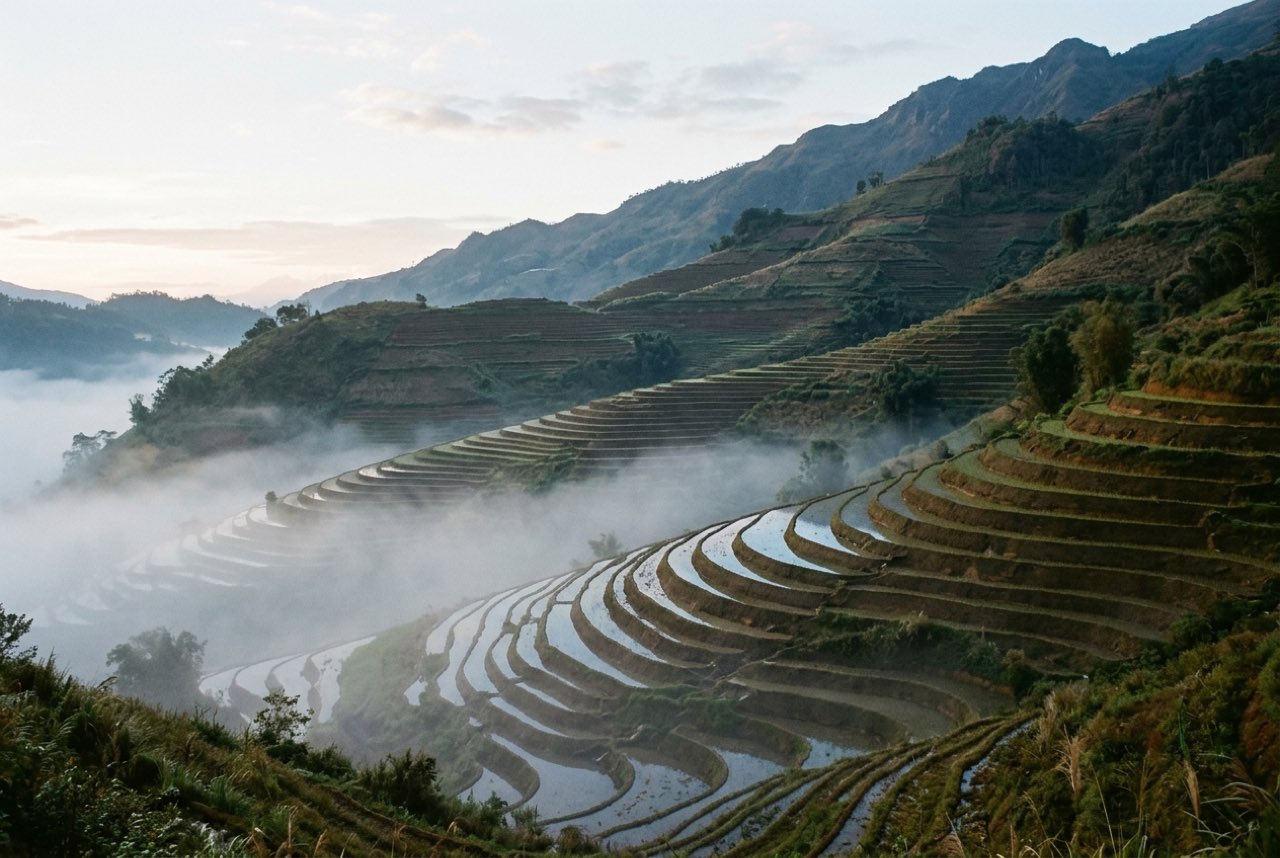
On the far side the road gives up 6,000 feet in 30 miles and the temperature comes back the other way. Diskit, at 10,200 feet, reaches 86 F on a July afternoon, and the valley floor is sand: 25 miles of dune with double humped camels grazing on it, descended from pack animals left behind when the caravan road closed. Turtuk, two hours further down at 8,530 feet, is the lowest ground on the route and the last village the road serves; nothing civilian goes beyond it. The apricots there come in during the second week of July, and by the last week of the month they are stoned and laid out on the flat roofs in orange sheets three fruit deep, with the kernels cracked separately for oil. The village speaks Balti rather than Ladakhi. Two nights are held there in a family guesthouse of six rooms where dinner is at 20:00 or not at all.
The eastern plain and the two nights on it
Back over the pass and east, the road climbs to 17,590 feet at Chang La, which keeps old snow along its edges through July, and drops to a lake 87 miles long lying at 13,862 feet with two thirds of its length outside India. The water is brackish, it freezes solid in winter, and the colour it turns between eleven and three is what people drive five hours for. From there the route runs south down the plain through Chushul and Nyoma, 140 miles that eat seven hours because 50 of them are stone and washboard and because three of the water crossings are ankle deep at eight in the morning and knee deep at four in the afternoon, once the ice above has had a full day of sun on it.
The two canvas nights are on that plain. The first is at Korzok on Tso Moriri, 14,836 feet, a village of about 200 people and a monastery, where the tents stand on wooden platforms with real beds in them and a bucket of hot water is carried across at seven. The second is at Hanle, 14,764 feet and four hours further out, where an observatory sits on the ridge above the village and there is no wired light in any direction. Between the two you cross the flat ground where the kiang run, and you stop for cranes because the driver will stop for cranes, at 300 yards, which is as close as anyone is allowed to go.
Passes north and east still shut; only the Leh valley and the road west to Lamayuru are driveable
The north pass usually opens to civilian wagons in the second half; nights in Leh still near 36 F
Everything open, riverbeds low, dust in the air from ten in the morning onward
Warmest month, barley in ear, apricots ripe in the Nubra, one or two cloudbursts on the western road
Wettest month of the year and still under an inch, but the Zanskar road washes out most seasons
Cold and very clear, poplars turning after the twentieth, lake camps begin to fold
Camps at the lakes are gone by the first week, nights at Korzok near 14 F, roads still driveable
The passes close in stages and the eastern plain goes out of reach until May
Beds, food and the length of a day
Nine of the eleven nights are rooms with a private bathroom: two in Leh at the start, one at Diskit, two at Turtuk, one back in Leh in the middle of the route, one at the lake, and two in Leh at the end. Hot water in the guesthouses is solar, which means it is hot from about 16:00 to 21:00 and lukewarm on either side of that. Dinner is at a set hour everywhere, usually 19:30 or 20:00, and it is cooked for the house rather than ordered from a card: thukpa, the barley and vegetable stew they call skyu, rice, dal, and apricot in some form once the fruit is in. Breakfast is eggs, bread and sweet tea. Lunch happens where the road allows it, which on the two long driving days means a roadside kitchen at the foot of a pass with four things on the stove.
A driving day begins at 07:30 and the guide will not push it later, because the convoy gates and the water crossings both get worse as the day goes on. Of the twelve days on the ground, four are five to seven hours in the wagon, five are two hours or less with a monastery or a walk at the end of them, and three do not move at all. On the days that do not move you are at 11,562 feet in Leh with a bazaar, a bakery that starts at six, and a walk up to the old palace that gains 400 feet and takes most people half an hour.
Reserving one of the four July starts
The four starts sit inside one named week and the operating company runs the identical route on each. Tell this office which start you want, how many rooms, and how many people are in them, and a price built against those exact dates comes back to you inside two to four working days. Nothing on this page is owned by the people selling it: not one wagon, not one guesthouse room and not one length of canvas on this route belongs to Third Coast Dispatch Bookings LLC. The bill reaches you from the company that drives the route, drawn on its own account and in its own name, and no money of any kind is taken at this office.
No air ticket is sold here. The long leg east is yours to book, and the driver meets whatever you land on at the Leh airfield. Entry paperwork for India sits outside what this office handles and nobody here will advise on it. Third Coast Dispatch is the name used by Third Coast Dispatch Bookings LLC, at 600 SW Jefferson St, Suite 302, Lee's Summit, MO 64063, working the Kansas City metro and the rest of Missouri. Dates and questions go to bookings@thirdcoastdispatch.com, the office line is +1 (816) 525-2846, and if a figure on this page is wrong, write to corrections@thirdcoastdispatch.com and it gets corrected.
Put a departure in front of the office
Open 24/7, this form will take a booking request whenever you write it. Nowhere on it is a card number requested and nothing is charged, because no money is ever owed to this office. Whatever reaches the form is opened in the order it landed, and an answer goes back inside one working day.
Nowhere on this page is a card number requested, and none is kept by this office anywhere. Writing costs you nothing and ties you to nothing. Asking is not the same as holding: your date belongs to whoever asks next until the operating company has confirmed it on paper and you have read what it requires of you.